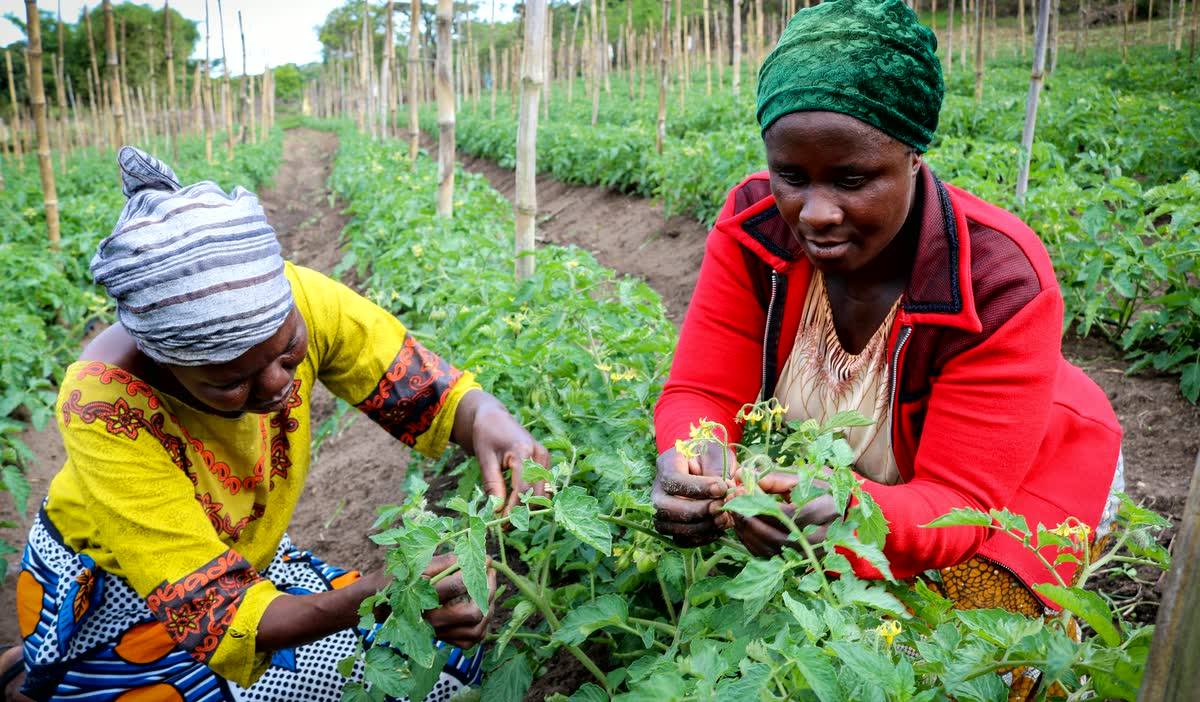
Everyone in the country. No shortlist, no lottery, nobody quietly left out.
Unconditional
No job required. No form to fill in to prove you deserve it.
Individual
Paid to you, as a person. Not to a household, not to whoever is named head of it.
Regular
Every month. Steady enough to plan a life around, not a windfall to survive between.
Cash
Money you decide how to spend. Not a voucher, not a queue, not a service you did not ask for.
What it isn’t
And what it isn’t.
Not a one-off payment.
Not a voucher or a service.
Not money from nowhere.It is a share of what we already produce together.
Why we need it
Everyone deserves a floor.
Security buys choice.
In a three-year US trial, 1,000 adults received $1,000 a month, unconditionally. In the first year they reported less stress and more food security.
OpenResearch / NBER w32711 — 2020–2023 cohort; 2,000 comparison participants received $50 a month.
The machine
Who owns the machine?
Different models of public wealth, and who is left out of the data economy.
$2.3trillion
Norway’s sovereign wealth fund — a public investment fund built from oil and gas revenue and investment returns — owns, on average, 1.5% of the world’s listed companies by value, and more than 2% of each of 1,000 companies.
NBIM (Norges Bank Investment Management), 30 September 2026 (NOK 22,014bn); NBIM annual report 2025.
$1,000a year per eligible resident (2025)
Alaska has paid its annual Permanent Fund Dividend to every eligible resident since 1982 — one payment a year, unlike the trial’s $1,000 a month. One study estimates it cut the number of Alaskans below the poverty line by 20–40%.
Alaska Permanent Fund Dividend 2025, 618,863 paid applicants. Berman 2024, Poverty & Public Policy 16(2).
<1%of the world’s data-centre capacity is in Africa
Nearly one in five people on earth live in Africa.
UN World Population Prospects 2024; Africa Data Centres Association, Data Centres in Africa 2026.
Norway and Alaska show that public wealth exists and can be shared; Africa’s share of the machine shows that who owns it decides who benefits.
Recognition
Nobody should have to prove they deserve to exist.
A changing world
The ladder is being pulled up.
AI is not oil.
A model can be copied and sent anywhere for almost nothing — the question is who owns it when it arrives.
Money pays the rent. A floor is what makes the rest of your life possible.
Photographs: Oktay Köseoğlu (Pexels License); Eugenia Pan’kiv (Unsplash License); Jason Houston / USAID and USAID in Africa (public domain); W.carter (CC0). Images are licensed individually and are not covered by the site’s CC BY licence.
Basic income: Regular cash paid to every person, with no income or savings test and no work requirement. The landing page sets out the five words — universal, unconditional, individual, regular, cash — in full.GDP: Gross domestic product: the total market value of the final goods and services a country produces in a period, usually a year. It measures output, not the income a household receives, and not what a government can afford to spend. The model uses GDP and total population to derive GDP per capita.GDP per capita: GDP divided by total population: a rough average output per person, not the income of a typical person and not a measure of need. The illustrative default payment is derived from it.PPP: Purchasing power parity: an adjustment for what money can buy in each country, so a poverty threshold is compared at similar real prices. It is not a market exchange rate, and this site does not use it to convert scenario amounts into US dollars.Illustrative default payment: The illustrative amount starts at 25% of a country’s annual GDP per capita per year. The monthly payment is that annual amount divided by twelve (0.25 × annual GDP per capita ÷ 12), not 25% paid every month. It is an assumption, not a living wage, a poverty line or a recommendation.Modelled: Calculated by applying stated inputs and assumptions. A modelled number is a scenario for comparison; it is not a measurement, a forecast or a government commitment. A provider-published observation can also be a model output; its status and measurement line say so.Indicator: A single published measure, such as tax revenue as a share of GDP or an unemployment rate. Each indicator keeps its own unit and reference year. Social-need indicators are shown separately and are never blended into one score.Natural resource rents: The value of oil, natural gas, coal, mineral and forest production above the cost of extracting it, measured as a share of GDP. “Rents” here is that surplus — not housing rent, land rent or government revenue.ILO: The International Labour Organization, the UN agency that publishes the unemployment series. “Modelled ILO estimate” means the rate comes from the ILO’s model rather than a direct count of every person in the labour force.Coverage: The number of indicators that have a value for a country, out of all indicators in the release. It is data coverage, not funding coverage: it does not show whether the country could fund a payment.Scenario: A set of stated payment and funding assumptions that the calculator applies. A scenario is not a forecast, a government proposal or a prediction of what would happen.Payment cost: The modelled annual gross outflow of the payment: for each age band, 12 × the number of eligible people × the monthly amount. In the default scenario, eligible means all residents — adults and children — and the model assumes every one is paid. It is not a living wage, a poverty line or a promise.Additional funding: Money a funding scenario would raise beyond what the country already collects. It is not total government revenue, and it is not necessarily available to spend: collection losses, administration, displaced receipts and existing claims are outside the illustrative figures unless a scenario says otherwise.Gap or surplus: Payment cost minus additional funding. A positive figure is a gap — funding falls short of the modelled cost; a negative figure is a surplus. It is arithmetic on two models, not a budget, a forecast or a verdict.Feasibility composite: A proposed weighting of several narrow measures into one score between 0 and 1. UBI CC does not treat it as a verdict, a ranking, a forecast or evidence that UBI works. It stays unavailable until its essential inputs and evidence checks are met.Insufficient data: No usable value could be produced for that country and measure — either no observation exists or a required input is missing. The page shows these words instead of a number. It never substitutes zero; a genuine observed zero is a different thing and is labelled as one.Observed, estimated and imputed: How a stored value came to exist. Observed: the provider published it and the project applied no modelling to it. Estimated: the provider or the project produced a model estimate. Imputed: the project filled or derived the value from other observations, with a recorded method — not something the provider published as an observation. Status never means UBI CC measured the value directly. Release 1.0.0 stores only observed values.Reference year: The year a value describes, not the year it was retrieved or published. A stale flag means the observation is older than the indicator’s freshness threshold; it is still an observation, not a current estimate.